Chile is a fascinating country. Look it up in a map, and you will see that its dimensions have a disparity about them that no other country does. It is the thinnest country in the world, resembling a ribbon on the west coast of the South American continent. According to Wikipedia, “From north to south, Chile extends 4,270 km (2,653 mi), and yet it only averages 177 km (110 mi) east to west”. Chile’s jurisdiction even includes several Polynesian islands and a slice of Antarctica.
Among its many fascinating geographical features is the world-famous Atacama Desert – one of the driest places on earth.
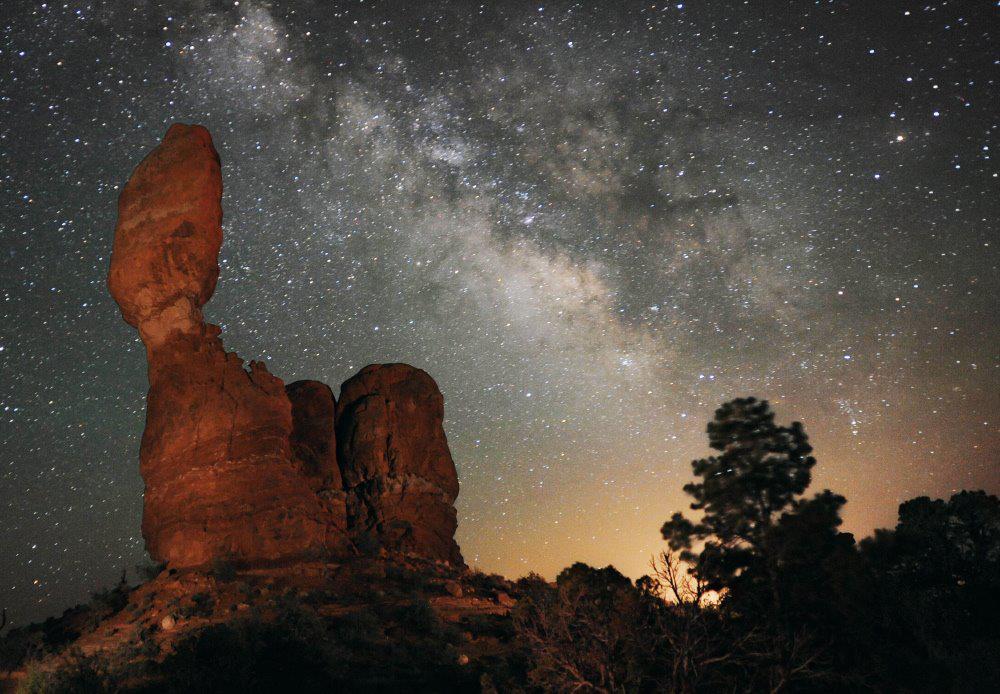
Chile’s Atacama Desert offers a rare set of factors – very little rainfall, crystal-clear skies, high altitudes of 2410 to 4270m and little-to-no light pollution – to make it a stargazing haven for amateurs and professional astronomers alike.
 It comes as no surprise that the Atacama is a major hub for astronomical research, being home to a number of world-class observatories. While many of these restrict entry to visitors, a handful offer guided tours. Many of the area’s hotels offer stargazing as part of their programme. Full moon nights offer a hindered experience, so it is better to avoid them when planning your trip.
The ground-breaking complex Cerro Paranal run by the European Southern Observatory, and equipped with the most cutting-edge facilities, is the first stop on your astronomical tour. In the world of high-powered telescopes – where rival institutes compete to claim “most powerful” specimens – Paranal’s is one of the best. Make sure you book ahead for this three-hour tour of wonderment. It stops by the centre’s literally-named “Very Large Telescope” – consisting of four 8.2m diameter telescopes – that allows astronomers to see details up to 25 times better than with an individual telescope. The tour also takes you into the space-age lobby of the on-site hotel, where portions of the James Bond film Quantum of Solace were filmed. The experience is surreal – a bit like landing on the moon – as you would be at 2664m above sea level, surrounded by dry desert.
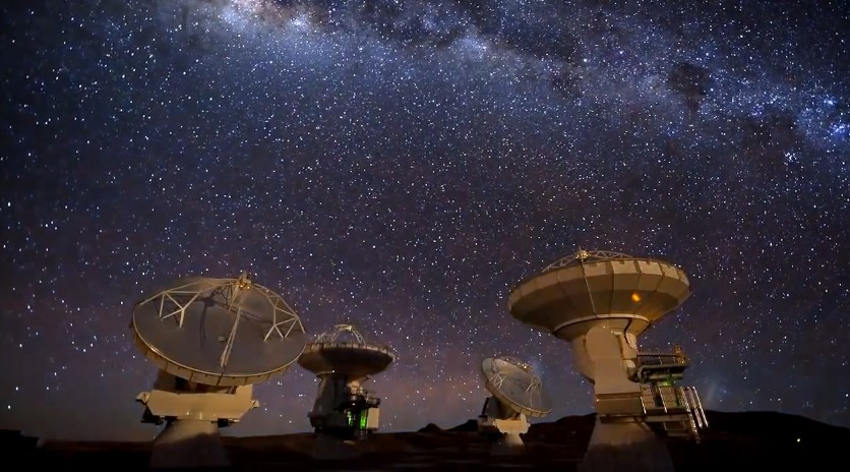
By far the most ambitious radio telescope the world has ever seen – the Atacama Large Millimeter/submillimeter Array (ALMA) overshadows Paranal and other observatories in the Atacama. The ALMA (meaning ‘soul’ in Spanish) is the largest land-based observatory ever built. Situated on Chajnantor plateau at a dizzying altitude of 5000m, 40km east of the oasis town of San Pedro de Atacama.
The town of San Pedro itself has several stargazing options. Guests will gather beneath an observation dome and glimpse at the celestial wonders – remnants of supernovae, planets in other solar systems, globular clusters and misty nebulae. You can even photograph the stars – digital cameras can be mounted onto the telescope for spectacular astronomical photography.
Chile’s the Atacama Desert brings out the best in us and is an important destination for gazing up at the stars, whether you are into the hard science of astronomy or just love looking at the stars for the way it makes you feel spiritual.