Uyuni is distinguished by its exceptional flatness. Elevation varies by just 1 meter over the entire surface. With clear skies, dry air, and a highly reflective and stable surface, conditions are perfect for scientists seeking to calibrate orbiting satellites.
Walking on the vast white sheet of salt is a wonderful experience. In some places, the salt dries up into ridged patterns of rough hexagons. In other spots, it’s bumpy and textured like freezer frost. The salt crystals are big and solid, rough to the touch, and crunchy under your feet. Though it mimics the look of ice, it lacks the bite of cold against flesh. The salt crust ranges in thickness between 1-10 meters and overlays a deep pool of brine, the remains of a dried prehistoric lake. A collective of local workers mines enormous quantities of salt, approximately 25,000 tons every year. It’s common to see these men at work, creating mounds of mushy salt (for faster drying) and shoveling loads of dried salt onto truck beds. Geologic studies have determined that the salt flat holds between 40 and 70% of the world’s lithium reserves, as well as quantities of gypsum and halite, though the Bolivian government does not currently permit extraction of these minerals.
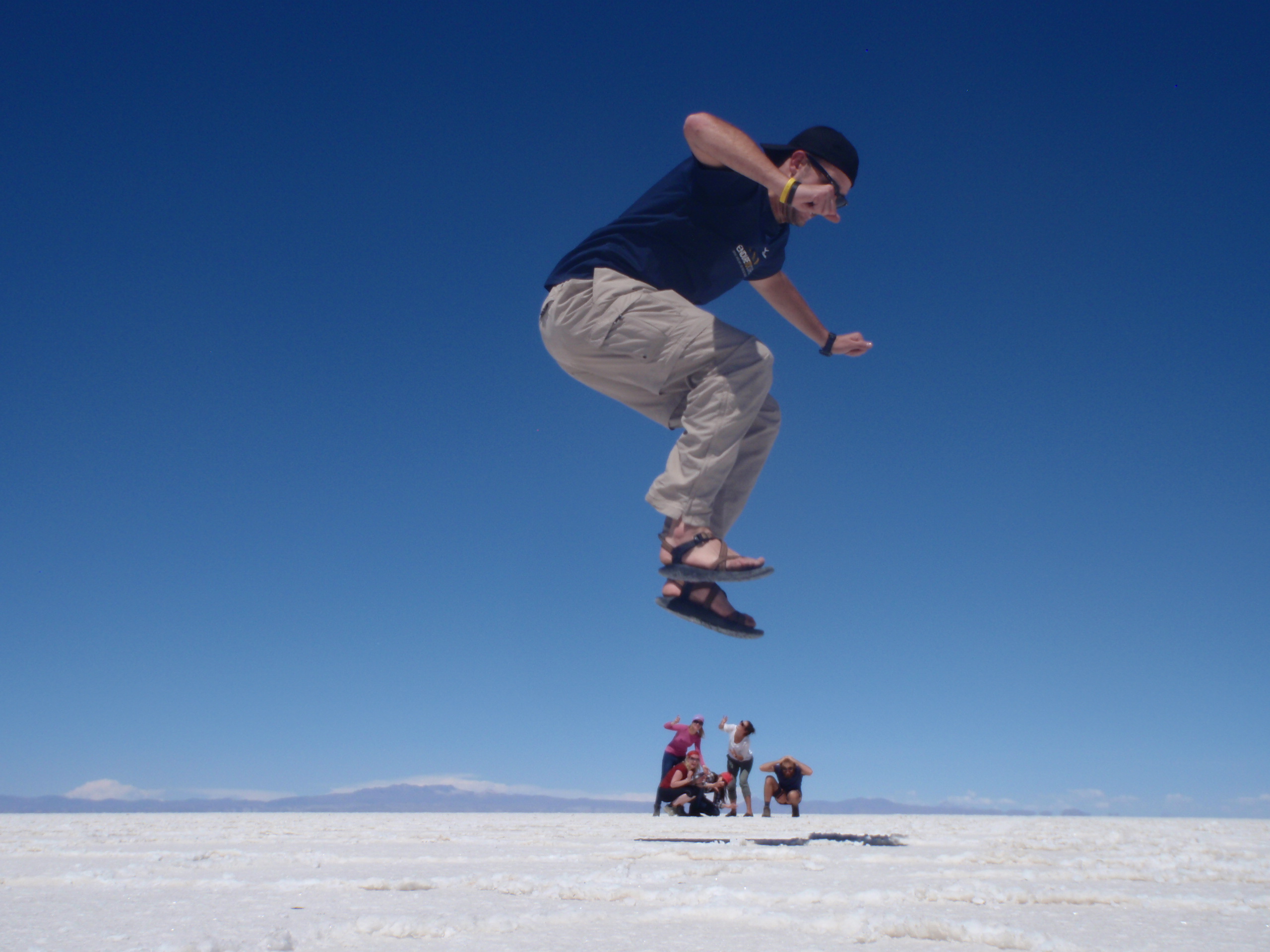
A camera may be the most important piece of travel gear on a Uyuni tour.
Do a web search for “Uyuni images” and you’ll see examples of cool photos taken on the Salar. Fun photography has become a hallmark of this top Bolivia tour. The dry season is the best time to play around with perspective. Small objects at the forefront become magnified, while those set a few feet back appear tiny, like something out of the 1989 film Honey, I Shrunk the Kids.
 The optical fun takes a different form during the wet season in Uyuni. Rainwater pools on the surface, erasing the horizon and acting like a giant mirror to reflect wisps of clouds and the big blue sky. The doubled images of people, vehicles, and other objects seem to float on nothing.
Photographs become the key mementoes of a surreal Uyuni tour experience.
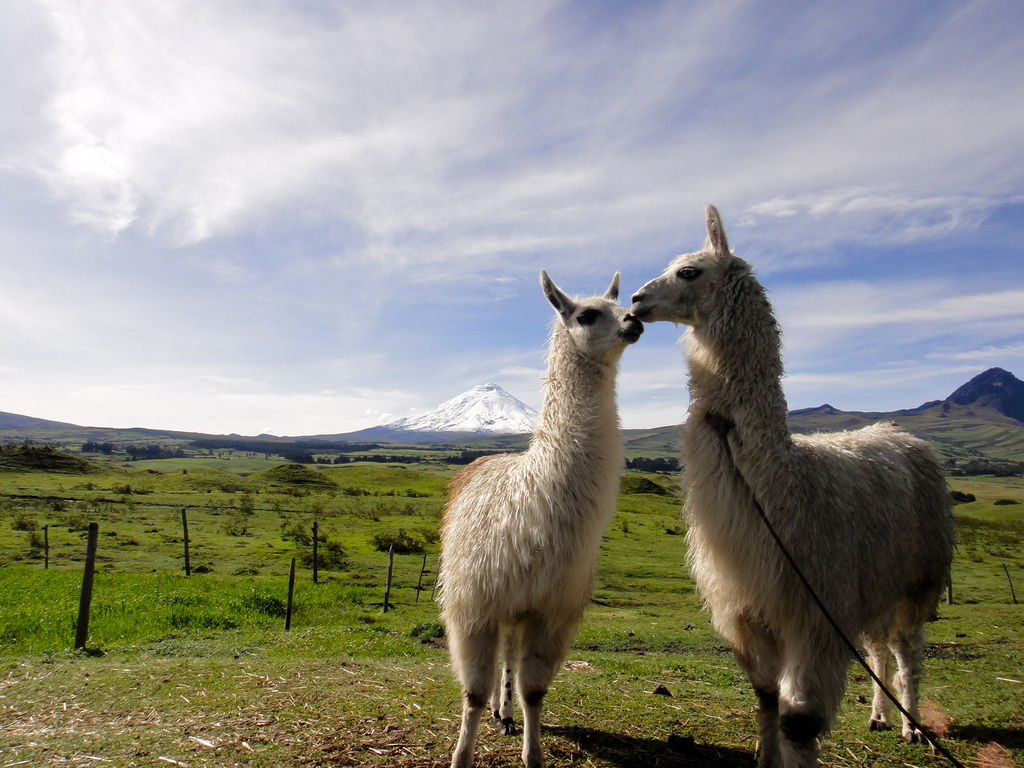
Man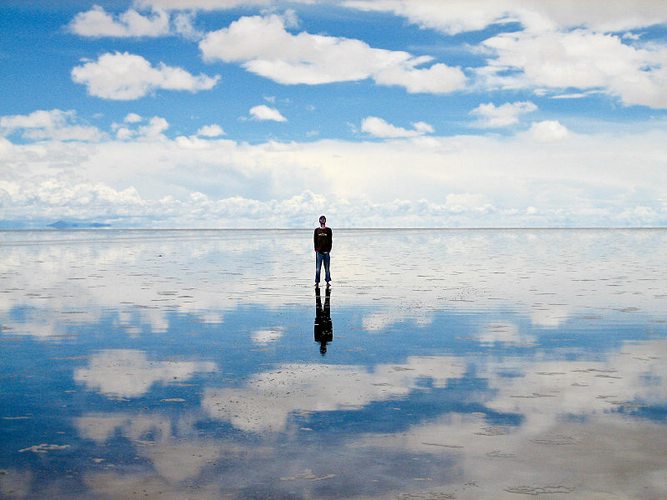 y travellers, having taken the trouble to journey out this far, decide to take a 3-day tour beyond Uyuni and into the surrounding highlands. Here, the white salt is replaced by a brown dryness spotted with short shrubs. It’s a land suitable for little except growing quinoa and grazing llamas.